How lightweight, open-source agent swarms are transforming 3PL and SMB operations
Introduction
The agentic AI wave has matured. Frameworks such as CrewAI, AutoGen, LangGraph, and the lightweight OpenAI Swarm have demonstrated that multiple LLM-powered agents collaborating on subtasks outperform monolithic models on complex, multi-step business processes.
OBI AI Consulting has distilled these advances into Open Claw—a minimalist, self-hostable orchestration layer purpose-built for operational teams in logistics and SMB environments. By embedding agent swarms inside n8n workflows, Open Claw combines the flexibility of code-first agent frameworks with the visibility and reliability of visual automation platforms. The result: high-impact automation that any operations manager can understand, audit, and extend.
Challenges in 3PL and SMB Logistics Operations
Common pain points include:
- Proof-of-Delivery (POD) and document processing – manual extraction, matching, and AR notification.
- Carrier tender response – parsing emails/EDI, applying business rules, updating TMS.
- Exception handling – delays, address issues, capacity shortages requiring human triage.
- Inventory reconciliation and cycle counting – fragmented data across WMS, ERP, and spreadsheets.
- Customer communications – status updates, claims, and escalations.
Labor shortages and rising fulfillment costs amplify these inefficiencies, with many 3PLs still relying on 10–20 manual touches per shipment.
Why Small Agent Swarms Outperform Traditional Approaches
Single-agent systems suffer from context overload and brittle tool selection. Monolithic RPA lacks adaptability. Open Claw’s small-team design—Supervisor + domain specialists—enables:
- Role specialization → cheaper/faster models per agent.
- Handoff-based collaboration → dynamic routing without central orchestration bloat.
- Persistent workflows → n8n handles retries, logging, and human escalation.
- Open-source foundation → full audit, local LLM support (Ollama, Groq, Anthropic), and no usage-based pricing surprises.
Open Claw Architecture
Open Claw follows three core principles:
- Lightweight – client-side handoffs, minimal state (context variables + n8n memory).
- Open & Extensible – MIT-licensed, composable with any LangChain-compatible tools.
- Human-first – every swarm includes explicit human-in-the-loop breakpoints.
Key Components (see architecture diagram above):
- Supervisor Agent (n8n AI Agent node) – receives trigger, decomposes task, routes via handoff, aggregates results.
- Specialist Agents – each a sub-workflow with dedicated system prompt, tools, and memory. Examples:
- Order Intake Agent (Gmail/IMAP + EDI parser).
- Inventory Optimizer Agent (WMS API + RAG over contracts/tariffs).
- Shipping Selector Agent (real-time carrier rate APIs).
- Exception Handler Agent (rule engine + escalation).
- Notification & AR Agent (templated comms + accounting sync).
Orchestration Mechanics
- Handoffs use Swarm-style transfer_to_xxx() functions that return the next Agent object.
- n8n sub-workflows act as reusable tools, providing persistence, error recovery, and 500+ native integrations (ShipStation, QuickBooks, Shopify, etc.).
- Memory: Simple per-agent + shared vector store (Qdrant/Weaviate) for RAG.
- Observability: Full execution trace in n8n + optional LangSmith export.
The entire swarm runs self-hosted on a single VPS or Docker Compose instance, supporting local models for sensitive data.
3PL Use Cases and Implementation Examples
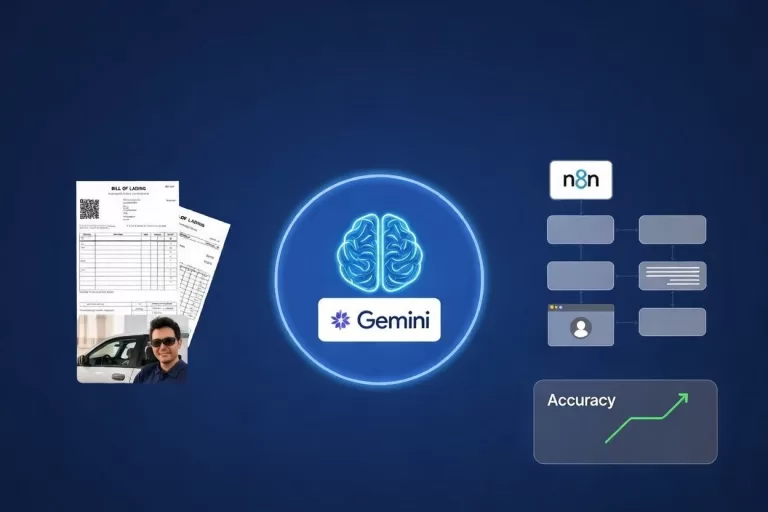
1. Automated POD-to-AR Workflow Trigger: New email attachment or webhook. Flow: Intake Agent → OCR/extraction → Inventory Agent validation → AR Agent posts to accounting + notifies customer. Result: Manual touches reduced from 8–12 to 1–2 (escalations only).
2. Intelligent Carrier Tender Response Trigger: Inbound EDI/email. Flow: Intake normalizes → Optimizer applies rules & rates → Selector books best carrier → Notification confirms. Human breakpoint only on >5 % rate variance.
3. Proactive Exception Swarm Daily scan of delayed shipments. Exception Agent triages → Optimizer reroutes → Notification Agent updates all parties.
Observed Outcomes (Pilot Deployments)
In OBI client engagements across mid-size 3PLs (2025–early 2026):
- 55–75 % reduction in POD processing time.
- 40–60 % fewer unhandled exceptions reaching operations staff.
- 25–45 % faster tender response cycles.
- ROI typically achieved within 8–12 weeks.
These figures align with industry benchmarks for multi-agent logistics automation while remaining conservative.
Security, Compliance, and Deployment
- Data residency – fully self-hosted option; agents never send PII outside your VPC unless explicitly configured.
- Audit – every handoff and tool call logged with timestamps and reasoning traces.
- Compliance – SOC 2-ready templates; role-based access in n8n.
- Phased rollout – OBI recommends starting with one swarm (e.g., POD processing) before expanding.
References (selected)
- n8n Blog: Multi-agent Systems (Dec 2025).
- OpenAI Swarm GitHub Repository (educational lightweight orchestration).
- AIMultiple: Top Open-Source Agentic Frameworks Benchmark (Jan 2026).
- Industry reports on 3PL automation (RTS Labs, CrossML, 2025–2026).